Town Lake
Silent SpringTown Lake, the new lake in Austin, was the first named site in a 1961 fish kill that spread down the Colorado River. In Rachel Carson’s account, its role is both geographic and evidentiary: dead fish appeared there shortly after dawn, and later chemical tests connected the lake to insecticides released from a water system and carried into the river.
Setting and role
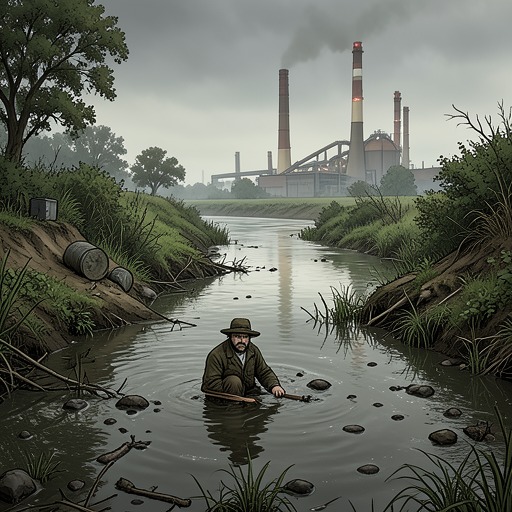
Town Lake lay in Austin, Texas, at the head of the affected stretch of the Colorado River. The incident began there on Sunday morning, January 15, 1961. The day before, no dead fish had been seen; shortly after daylight, they appeared in the lake and in the river for about five miles below it. That abrupt change made Town Lake the first visible point in a disaster whose full reach would only become clear over the following days.
The poisoning and its course
The initial deaths were followed by reports of dead fish fifty miles downstream on Monday. Investigators traced the suspected source to a water system that had recently been flushed with several million gallons of high-pressure water to clear accumulated debris. In the process, insecticides lodged in gravel, sand, and rubble were apparently released and carried into Town Lake, then passed into the river. Chemical tests later established the presence of insecticides in the water.
From the lake, the poisonous material moved downstream, extending the fish kill far beyond Austin. The account estimates that fish were killed for 140 miles below Town Lake. The sequence—from the flushing of the system, to the sudden appearance of dead fish in the lake, to the downstream reports—shows how a local maintenance operation could mobilize chemicals stored in debris and expose a much larger river system.
Significance
Town Lake is not presented merely as a setting for the first reported deaths. It is the point where an otherwise hidden contamination became unmistakable and where the connection between stored insecticides, water movement, and ecological harm could be followed. The fish kill also illustrates a central concern of Silent Spring: poisons do not necessarily remain where they were deposited or where their use was intended. Once released into connected waters, their effects can travel downstream, carrying the consequences of an earlier intervention into places well beyond its immediate site.